Hire a Skilled L1 Attorney
In today's interconnected global economy, the ability to move key personnel across international borders is not just an advantage-it's a necessity. For multinational corporations, the L1 intracompany transferee visa is the primary vehicle for transferring personnel to the United States. Nevertheless, the process to securing an L1 visa is a complicated regulatory process, characterized by intricate regulations and demanding documentation. This is where a specialized L1 visa attorney becomes essential to your success. This guide is designed to provide a complete examination of the L1 visa process and to highlight the vital role that specialized legal assistance plays in navigating this journey. If you're a corporation seeking to transfer a key executive or an individual hoping to take on a new role in the U.S., appreciating the value of professional L1 attorney services is the first step toward a positive result.
Essential Points
- An L1 visa serves as a non-immigrant visa that allows multinational companies to relocate key personnel including executives, managers, and specialized employees to their U.S.-based facilities.
- To succeed, a petition must meet the comprehensive L-1A visa requirements for managers and executives, or L-1B visa criteria for specialized knowledge personnel.
- Hiring a specialized intracompany transfer attorney gives you a substantial edge thanks to their comprehensive expertise of this particular segment of immigration law.
- All-inclusive L1 visa legal services handle the complete procedure, from eligibility evaluation and process strategizing to documentation filing and managing USCIS requests.
- Selecting the right L1 attorney services is vital; search for a practice with a established reputation, outstanding correspondence, and a methodical, personalized methodology.
- The L1 visa serves as a clear route to acquiring a copyright, specifically for corporate leaders and management through the EB-1C category, making professional legal guidance crucial for strategic immigration decisions.
Understanding the L1 Intracompany Transfer Visa: Your Global Gateway
The L1 visa functions as an international bridge for multinational companies, facilitating the efficient transfer of crucial employees from a foreign office to an affiliated office in the United States. This non-immigrant visa category is specifically created to facilitate international business by permitting companies to harness their existing talent pool to set up or expand their U.S. operations. The L1 visa is divided into two subcategories: the L-1A for managers and executives, and the L-1B for employees with specialized knowledge. The basic premise of the L1 visa is the presence of a qualifying relationship between the overseas and U.S. operations (such as a parent company, subsidiary, or affiliate) and the employee's previous and intended roles within the organization. It functions as a effective tool for preserving corporate continuity and driving growth in the world's largest market, but its complexity requires careful navigation.
Breaking Down the Requirements: A Comprehensive Look at L-1A Visa Prerequisites
The L-1A visa for executives and managers is a widely desired immigration option, but it comes with a stringent set of requirements that must be meticulously met. Understanding the detailed L-1A visa requirements is comparable to following a detailed framework; every element must be perfectly aligned for proper approval. First, the applying organization must have a valid connection with a foreign company (parent, subsidiary, affiliate, or branch). Additionally, the employer must be, or will be, conducting operations as an employer in the U.S. and in at least one other country directly or through a qualifying organization for the length of the beneficiary's stay in the U.S. as an L-1. Next, the employee must have been employed by the qualifying foreign organization for at least one continuous year within the three years immediately preceding their admission to the U.S. Lastly, and most significantly, the employee must have been employed in a managerial or executive capacity abroad and be entering the U.S. to perform in a similar role. Proving the primarily managerial or executive nature of the role, both past and future, is frequently the most complex element of the L-1A petition and requires detailed evidence of role specifications and company structure.
The Professional Difference: The Importance of an Intracompany Transfer Legal Specialist
While any immigration lawyer can submit an L1 petition, there is a clear advantage to engaging a dedicated intracompany transfer attorney. This practice area of immigration law is highly specialized, with its own special array of regulations, evolving policy interpretations, and exacting evidentiary standards that may change with administrative priorities. A specialist delivers a depth of knowledge and proven track record that a generalist falls short of providing. They recognize the common pitfalls, the intricate aspects that can make or break a case, and the specific types of evidence that USCIS adjudicators deem most convincing. An intracompany transfer attorney can effectively structure the petitioner's job duties to meet the strict definitions of "managerial" or "executive" capacity, and they excel at build a persuasive narrative that addresses and prevents potential challenges from USCIS. This specialist advantage can substantially enhance the possibility of a favorable and seamless application process, protecting the company essential time, money, and strategic momentum.
Navigating L1 Visa Legal Services: From Initial Consultation to Final Approval
Working with a law firm for your L1 visa application should be a comprehensive, end-to-end partnership. High-quality L1 visa legal services go well beyond just completing paperwork and sending a package to USCIS. The procedure should begin with an comprehensive consultation to carefully analyze the suitability of both the company and the employee, spotting any prospective issues or red flags from the outset. This is proceeded by a strategic planning phase, where the attorney creates a customized strategy for the petition, presenting the strongest legal arguments and the necessary supporting evidence. The essence of the service involves the meticulous preparation of the application itself, including the collection and structuring of thorough supporting documentation such as corporate records, financial statements, organizational charts, and detailed descriptions of the employee's role. The legal services should also include the preparation of a detailed legal brief that effectively argues why the case meets all statutory and regulatory requirements. Lastly, the service should include continuous support throughout the adjudication process, including timely and strategic responses to any Requests for Evidence (RFEs) that may be issued by USCIS.
Selecting Your Advocate: What to Look for in L1 Legal Representation
When choosing a legal representative for your L1 visa application, you are not just selecting a lawyer; you are picking a advocate for your company's global mobility initiative. The quality of L1 attorney services can differ significantly, so it is crucial to understand what to seek to ensure you have the best possible counsel on your side. Above all, seek out a firm with a demonstrated and confirmed track record of achievement in L1 cases. Ask about their track record, their experience with companies in your specific industry, and their knowledge with the embassy or service center that will be handling your case. Next, seek an attorney who is responsive, communicative, and transparent. You should feel at ease asking questions and get clear, timely responses. Furthermore, verify that the attorney has a thorough and up-to-date understanding of the complexities of L1 law, including the current policy trends and adjudication standards from USCIS. In conclusion, assess the firm's general approach. Do they provide a tailored, methodical approach, or a generic, assembly-line service? Choosing the right advocate can make all the distinction in the result of your case and the future of your U.S. operations.
The Application Fortress: Building an Unbeatable L1 Petition
A successful L1 visa petition needs to be an ironclad collection of documentation and legal reasoning. It needs to be so meticulously prepared and extensively supported that it eliminates any uncertainty in the adjudicator's assessment. This demands a comprehensive and methodical strategy for developing the case from start to finish. Every aspect of the petition, from the complex details of the corporate structure to the specific daily responsibilities of the employee, must be supported by solid and comprehensive documentation. The petition must go beyond the minimum standards; it should anticipate all possible inquiries from the adjudicator. This requires delivering a level of thoroughness and structure that facilitates the evaluation process. A properly constructed petition anticipates possible concerns before they arise. This is the foundation for building an winning L1 petition—a case that endures the highest level of scrutiny and secures success.
Responding to Evidence Requests Alongside an L1 Visa Legal Expert
Even the most carefully prepared L1 petition may receive a Request for Evidence (RFE) from USCIS. An RFE is not a denial, it remains a serious challenge that requires a thorough, timely, and well-planned response. This is a critical juncture where the guidance of an L1 visa attorney is not just valuable, but absolutely essential. A skilled lawyer will first meticulously analyze the RFE to identify the specific concerns and underlying questions of the adjudicator. They will then collaborate with you to collect the required supplementary documentation and create a detailed, point-by-point response that precisely answers each point raised in the RFE. A well-crafted RFE response doesn't simply provide the required documentation; it presents a new legal analysis that shows why the evidence, both old and new, satisfies the relevant regulations. Not responding properly to an RFE is one of the most common pathways to a denial, making professional legal guidance at this stage crucial to salvaging the case.
The L-1B Visa: A Gateway for Specialized Knowledge Professionals
Whereas the L-1A visa is intended for managers and executives, the L-1B visa provides a essential pathway for employees with "specialized knowledge." This classification is for professionals who maintain knowledge that is fundamental to the company's products, services, research, equipment, techniques, management, or other interests. The interpretation of specialized knowledge is intricate and has been the focus of ongoing discussion and evolving policy guidelines. It typically refers to knowledge that is unique, advanced, and not widely available throughout the industry but is specific to the petitioning organization. Demonstrating that an employee's knowledge is truly specialized is a high evidentiary bar. It requires comprehensive documentation, including training records, patents, or internal documents, and a compelling explanation of why the employee's skills and knowledge are essential to the U.S. operation and are not readily transferable to another individual. An experienced intracompany transfer attorney can be crucial in creating a compelling and effective case for an L-1B petition.
The Bridge to Permanence: Making the L1 to copyright Transition with Your Attorney
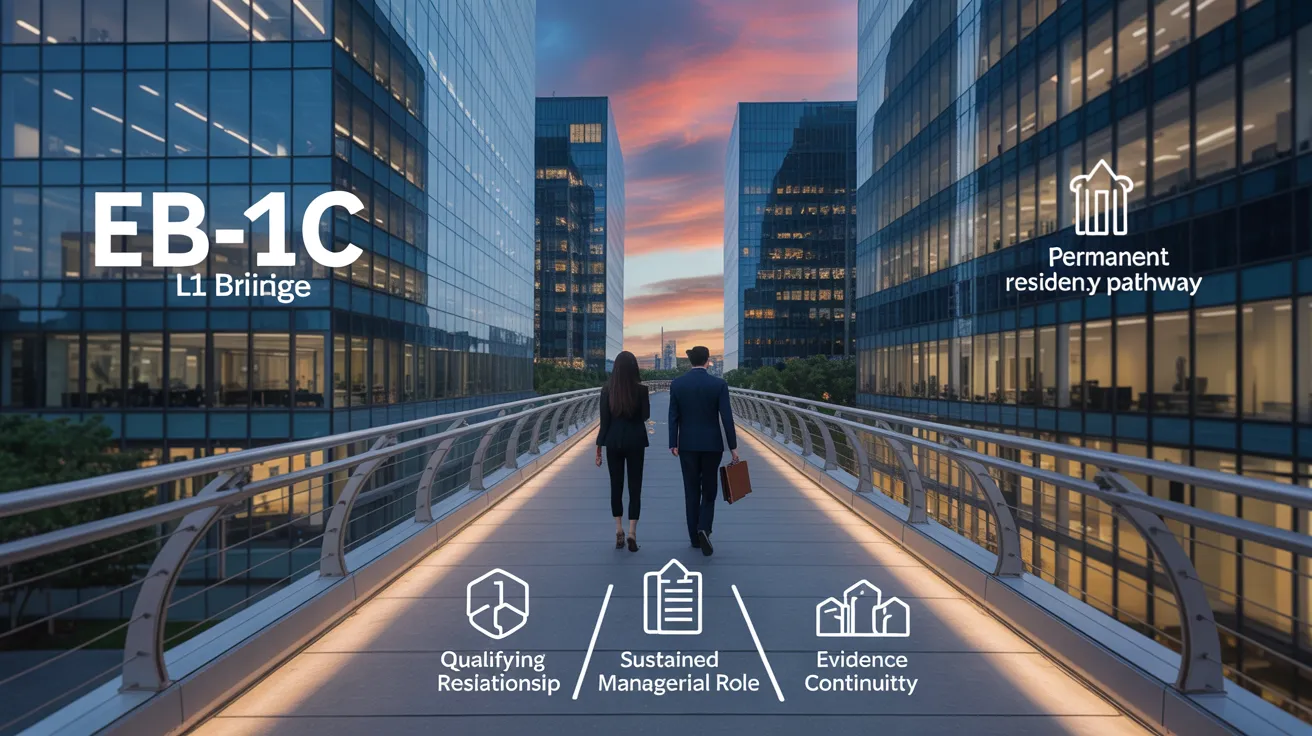
One of the most significant advantages of the L1 visa is that it can serve to act as a direct path to permanent residency (a copyright). The L-1A category, in particular, matches closely with the qualifications for the EB-1C immigrant visa category for multinational managers and executives. This offers a clear and typically faster path to a copyright than numerous other employment-based categories, since it eliminates the need for a PERM labor certification. However, the transition from a non-immigrant L1 copyright an immigrant EB-1C petition isn't automatic. It requires a new and distinct filing that anew demonstrates the qualifying relationship between the companies and the sustained managerial or executive nature of the employee's role. An experienced immigration attorney can deliver a seamless transition, using the evidence and arguments from the approved L1 petition to build a solid case for the copyright. This strategic, long-term planning is a vital component of comprehensive L1 visa legal services and is critical for professionals who desire to make the United States their permanent home.
Why Partner with a Premier L1 Visa Attorney? The Global Immigration Advantage
When the stakes are high and the success of your business growth hinges on the mobility of your essential staff, you require more than basic legal assistance-you must have a leading L1 visa attorney. Here at Global Immigration Partners, we provide beyond routine legal consultation; we create a collaborative relationship based on a cornerstone of expertise, experience, and an uncompromising devotion to client success. Our group of dedicated immigration professionals knows the subtle intricacies of L1 law and maintains a history of success in the most difficult applications. We take pride in our detailed preparation, our responsive communication, and our consistent devotion to achieving our clients' goals. We deliver a full spectrum of L1 attorney services, from first-stage qualification review and comprehensive strategy development to the concluding permanent residency filing. Working with Global Immigration Partners is the wise decision for businesses that require superiority, professional expertise, and, crucially, results.
FAQs
What is the difference between the L-1A and L-1B visas?
The L-1A visa category accommodates intracompany transferees who will function in a leadership or administrative capacity in the United States. These professionals will principally direct the organization or a major function, and will have substantial freedom in decision-making. The L-1B visa accommodates employees who maintain "specialized knowledge" of the firm's products, services, research, equipment, techniques, or management. The main difference lies in the character of the position. The documentation standards for the L-1A and L-1B categories are distinct, with the L-1A focusing on the individual's executive or administrative functions and the L-1B highlighting the unique and advanced nature of the individual's expertise. An experienced L1 visa attorney can guide you in selecting which visa type best matches a particular employee and prepare a strong application accordingly.
How long does an L1 visa allow me to remain in the U.S.
The total period of stay for an L-1A visa holder is seven years. When it comes to L-1B visa holders, the maximum duration of stay extends to five years. The initial visa is usually granted for a duration of up to three years (or 12 months for a new office petition) and could be extended in two-year increments up to the maximum limit. It is essential to monitor your visa expiration date and to apply for extensions in a timely manner to keep lawful status in the United States. Once the maximum period is reached, the individual usually has to exit the U.S. for at least one year before they become eligible for a new L or H visa.
Are family members allowed to accompany L1 visa holders?
A significant benefit of the L1 visa is that you have the ability to bring your immediate family members, including spouse and unmarried children below 21 into America. These family members are eligible for L-2 dependent visas. A key benefit of the L-2 status is that your spouse may request an Employment Authorization Document (EAD), allowing them to pursue employment with any U.S. company. This provides important flexibility for the family, permitting the spouse to pursue their career goals and supplement the family finances. Moreover, L-2 children can attend American educational institutions.
Understanding blanket L1 petitions and company eligibility
A blanket L1 petition serves as a procedure that permits large, established multinational companies to qualify in advance for the L1 visa program with USCIS. Once a company has an approved blanket L petition, it can move employees to the U.S. more smoothly, as there's no need to file an individual petition website for each employee with USCIS. Instead, the employee can seek their L1 visa immediately at a U.S. embassy or consulate abroad by providing a copy of the blanket approval notice and internal transfer documentation. To be eligible for a blanket L petition, a company and its U.S. entities must satisfy specific requirements, generally requiring having a U.S. office that has been operating for one year or more, having three or more national and overseas branches, subsidiaries, or affiliates, and meeting one of three size-related criteria (e.g., having a combined U.S. workforce of at least 1,000 employees). An intracompany transfer attorney can advise on whether a company is eligible for and would benefit from a blanket L petition.
What are the typical grounds for L1 visa rejections?
L1 visa requests are often denied for various reasons, usually resulting from insufficient documentation. Primary reasons for rejection often involve lack of evidence showing a qualifying relationship between the U.S. and foreign entities, inability to verify the employee's required one-year foreign employment in a qualifying capacity, and, most often, inability to establish that the intended role will be primarily in a qualifying executive, managerial, or specialized knowledge position. Imprecise role descriptions, incomplete organizational charts, and insufficient proof of the candidate's responsibilities or technical expertise are typical grounds for denial. Working with an experienced L1 visa attorney can reduce these potential issues by guaranteeing that the application is thoroughly prepared and that all visa requirements are properly addressed from the outset.